
Cricket is a hobby of expertise, precision, and well-defined pointers. One vital part of the cricket hassle that often confuses new lovers is the crease. If you have ever been at a loss for words, “How many creases are there in cricket?”, the easy solution is 4 creases at every end of the pitch. These lines help determine whether or not a batter is secure, where a bowler needs to deliver the ball, and several distinct important decisions at some point in the future of a healthy.
How Many Creases Are There in Cricket?
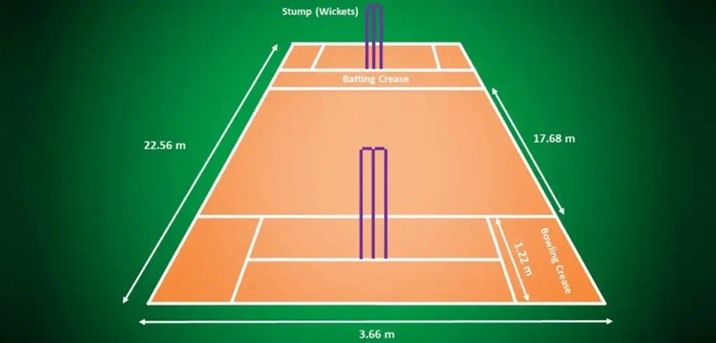
A well-known cricket pitch has 4 creases at every surrender, making 8 creases in total on the pitch.
These creases are:
- 1 Bowling Crease
- 1 Popping Crease
- 2 Return Creases
Each set of 4 creases is marked at each end of the 22-outside (20.12-meter) pitch.
Cricket Creases Overview
| Crease | Number at One End | Purpose |
|---|---|---|
| Bowling Crease | 1 | Holds the stumps and defines the bowling line |
| Popping Crease | 1 | Determines whether a batter is in or out of their ground |
| Return Crease | 2 | Restricts the bowler’s delivery position |
| Total | 4 | At each end of the pitch |
Since there are ends on the pitch, there are eight crease lines in total
What Is the Bowling Crease?
The bowling crease is the horizontal line in which the three stumps are placed.
Key Facts
- Length: 8 feet 8 inches (2.64 meters)
- Runs through the center of the 3 stumps
- Used as the reference line for wicket placement
The bowling crease paperwork the inspiration for marking the alternative creases.
What Is the Popping Crease?
The popping crease is one of the most important strains in cricket.
It is placed 4 toes (1.22 meters) in front of the bowling crease.
Importance
- Determines whether or not or now not a batter is successfully on their ground.
- Used in run-out picks.
- Used in stumping alternatives.
- Helps become aware of prison deliveries.
A batter needs to have their bat or frame grounded in the back of this line to avoid being run out.
What Are the Return Creases?
The cross-back creases are vertical traces drawn at proper angles to the bowling crease.
Their Purpose
- Define the place from which the bowler can legally deliver the ball.
- Prevent bowlers from stepping too large at the same time as bowling.
- Help umpires select honest deliveries.
If a bowler’s lower back foot lands outside the cross back crease, the delivery can be known as illegal.
Dimensions of Cricket Creases
| Crease | Distance or Length |
|---|---|
| Pitch Length | 22 yards (20.12 m) |
| Bowling Crease | 8 ft 8 in (2.64 m) |
| Popping Crease | 4 ft (1.22 m) in front of the bowling crease |
| Return Crease | Extends behind the popping crease on both sides |
These measurements are standardized according to the Laws of Cricket.
Why Are Cricket Creases Important?
Creases are essential due to the reality that they help umpires make accurate calls.
They Are Used For
- Run-out choices
- Stumping selections
- No-ball calls
- Fair bowling motion
- Wicket placement
- Batter protection
Without crease markings, masses of the sport’s legal guidelines couldn’t be enforced constantly.
How Creases Affect Batters
Batters should continuously be aware of the popping crease.
If a batter leaves their crease earlier than grounding their bat or foot and the fielding side breaks the stumps, they will be declared out.
Examples embody:
- Run out
- Stumped
Sliding the bat in the once more of the popping crease is a not unusual method utilized by batters to complete a run well.
How Creases Affect Bowlers
Bowlers must live in the go back crease and avoid overstepping the popping crease.
If they fail to accomplish that, the umpire calls a no-ball.
Consequences of a no-ball encompass:
- One extra run was presented to the batting group.
- The batter can’t be disregarded in most, if not all, methods of that shipping.
- A loose hit can also be checked in confined-overs cricket.
Common Cricket Decisions Involving Creases
| Decision | Crease Used |
|---|---|
| Run Out | Popping Crease |
| Stumping | Popping Crease |
| No Ball | Popping & Return Creases |
| Fair Delivery | Return Crease |
| Wicket Position | Bowling Crease |
These crease markings play a role in nearly every inning.
Interesting Facts About Cricket Creases
- Every international cricket ground makes use of the identical crease measurements.
- White paint is normally used to mark crease traces.
- Umpires test out the creases before the beginning of every match.
- Groundsmen repaint the creases in the event that they fade inside the path of prolonged fits.
- The modern television era often uses crease traces to assist with 0.33-umpire selections.
Tips for Beginners
If you are new to cricket, keep in mind these key factors:
- The bowling crease holds the stumps.
- The popping crease keeps batters solid from run-outs and stumpings.
- The return creases guide bowlers on where they’re capable of legally delivering the ball.
- There are four creases at every stop, or eight crease lines on average on the pitch.
Learning the fundamentals will make it a high-quality deal less complicated to recognize umpire choices throughout a game
Conclusion
If a person asks, “How many creases are there in cricket?”, the right answer is four creases at every give up of the pitch, in conjunction with one bowling crease, one popping crease, and two return creases. Across the entire pitch, there are 8 crease traces.
These markings are more than just painted traces—they are crucial to the sport’s recommendations. They decide whether or not a batter is stable, whether or no longer or now not a bowler has brought the ball legally, and help umpires make honest decisions. Understanding the purpose of each crease will offer you a better appreciation of the way cricket is played.
Frequently Asked Questions
1. How many creases are there in cricket?
There are four creases at each end of the pitch, making eight crease traces in common.
2. What are the four creases in cricket?
They are one bowling crease, one popping crease, and go lower again.
3. What is the popping crease used for?
The popping crease is used to decide whether or not or no longer a batter is accurately in their ground and is essential for run-out and stumping alternatives.
4. What is the bowling crease?
The bowling crease is the road on which the stumps are placed.
5. What are go-back creases?
Return creases are the two lines that define the area from which a bowler ought to legally supply the ball.
6. How long is a cricket pitch?
An elegant cricket pitch measures 22 yards (20.12 meters) in length.
7. Why are crease lines critical in cricket?
Crease strains assist umpires in making choices about no-balls, run-outs, stumpings, and honest deliveries at the same time as ensuring the game is completed regularly with the Laws of Cricket.